The Journey, National Holocaust Museum

OVERVIEW

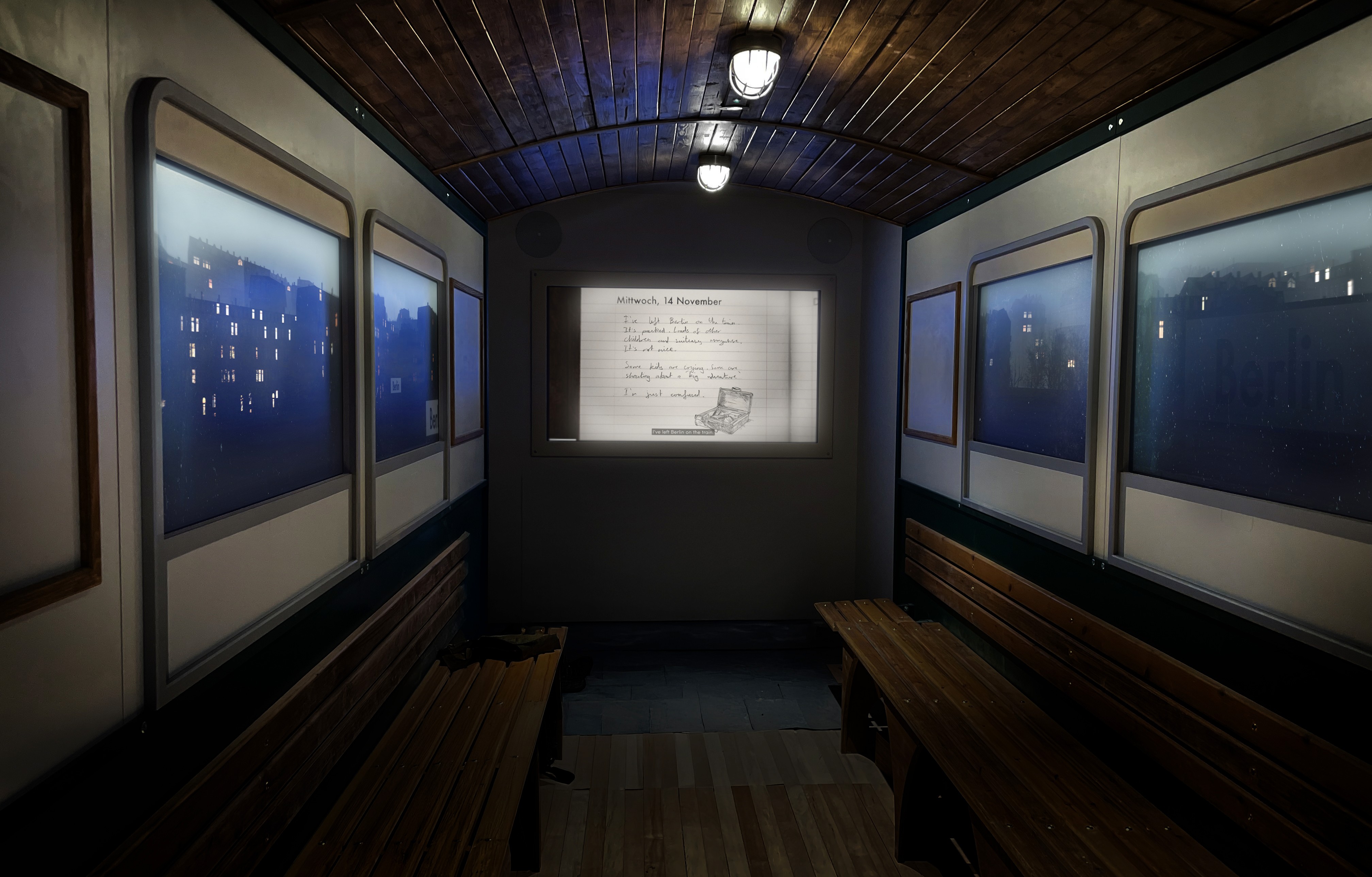
A three-minute narrative animation created for the revamped Carriage Room within The Journey exhibition at National Holocaust Museum. A set-designed train carriage space with four screens across two walls, placing visitors inside the experience of a young Jewish refugee boy fleeing Nazi Germany.

STUDIO

Ay-Pe

LOCATION

YEAR

2024

ROLE

LIGHTING

RENDERING

COMPOSITING

ANIMATION

CREDITS

Produced and Designed by Ay-Pe
Creative Direction: Richard Playford

About the project

The brief was to create something abstract rather than literal, and so we created a film that conveyed the emotional world of a young Jewish refugee boy fleeing Nazi Germany, experienced from his perspective as the train moved through the landscape outside the windows.

The room itself is set-designed to feel like the interior of a train carriage, with two screens either side acting as windows to the outside world. The film needed to work across all four screens simultaneously, so the sense of journey and movement had to feel continuous and immersive throughout the space.

The animation starts in a dark and uncertain place, reflecting the fear and disorientation of the boy's situation, before gradually shifting in mood, ending with the appearance of water and a quiet sense of hope for what might lie ahead. Keeping that emotional arc feeling honest without being heavy-handed was the core challenge, and something I worked through carefully with creative director Richard Playford.
The Journey, National Holocaust Museum

OVERVIEW

A three-minute narrative animation created for the revamped Carriage Room within The Journey exhibition at National Holocaust Museum. A set-designed train carriage space with four screens across two walls, placing visitors inside the experience of a young Jewish refugee boy fleeing Nazi Germany.

STUDIO

Ay-Pe

LOCATION

YEAR

2024

ROLE

LIGHTING

RENDERING

COMPOSITING

ANIMATION

CREDITS

Produced and Designed by Ay-Pe
Creative Direction: Richard Playford

About the project

The brief was to create something abstract rather than literal, and so we created a film that conveyed the emotional world of a young Jewish refugee boy fleeing Nazi Germany, experienced from his perspective as the train moved through the landscape outside the windows.

The room itself is set-designed to feel like the interior of a train carriage, with two screens either side acting as windows to the outside world. The film needed to work across all four screens simultaneously, so the sense of journey and movement had to feel continuous and immersive throughout the space.

The animation starts in a dark and uncertain place, reflecting the fear and disorientation of the boy's situation, before gradually shifting in mood, ending with the appearance of water and a quiet sense of hope for what might lie ahead. Keeping that emotional arc feeling honest without being heavy-handed was the core challenge, and something I worked through carefully with creative director Richard Playford.

The Journey, National Holocaust Museum

OVERVIEW

A three-minute narrative animation created for the revamped Carriage Room within The Journey exhibition at National Holocaust Museum. A set-designed train carriage space with four screens across two walls, placing visitors inside the experience of a young Jewish refugee boy fleeing Nazi Germany.

STUDIO

Ay-Pe

LOCATION

YEAR

2024

ROLE

LIGHTING

RENDERING

COMPOSITING

ANIMATION

CREDITS

Produced and Designed by Ay-Pe
Creative Direction: Richard Playford

About the project

The brief was to create something abstract rather than literal, and so we created a film that conveyed the emotional world of a young Jewish refugee boy fleeing Nazi Germany, experienced from his perspective as the train moved through the landscape outside the windows.

The room itself is set-designed to feel like the interior of a train carriage, with two screens either side acting as windows to the outside world. The film needed to work across all four screens simultaneously, so the sense of journey and movement had to feel continuous and immersive throughout the space.

The animation starts in a dark and uncertain place, reflecting the fear and disorientation of the boy's situation, before gradually shifting in mood, ending with the appearance of water and a quiet sense of hope for what might lie ahead. Keeping that emotional arc feeling honest without being heavy-handed was the core challenge, and something I worked through carefully with creative director Richard Playford.